
Jump To:
When water damage hits your home, the process of getting things back to normal can feel overwhelming. Water damage restoration follows a clear, step-by-step process, and understanding each phase takes a lot of the stress out of it. At Hydro Heroes – Water Damage Experts, our IICRC-certified team has walked hundreds of Southwest Washington homeowners through this exact process, from the first phone call through the final walkthrough.
What Happens When You First Call?
The process starts the moment you pick up the phone. A good restoration company asks specific questions right away: What happened? How long has the water been sitting? Is the source still active?
These questions help the team figure out what equipment to bring and how urgent the situation is.
For emergencies like flooding or sewage backups, our team responds 24/7 across Centralia, Olympia, Chehalis, Lacey, Tumwater, and surrounding communities. Speed matters. The EPA notes that mold can begin growing on wet materials within 24 to 48 hours, so every hour of delay increases the scope of the job.
What Does the Inspection and Damage Assessment Look Like?
Once the crew arrives, the first thing they do is assess. Not clean up, not start pulling things apart. Assess.
Technicians use moisture meters to map where water has traveled. Water rarely stays where you can see it. It wicks through drywall, seeps into subfloors, and pools in crawl spaces.

Thermal imaging reveals moisture hiding behind walls and under flooring that isn’t visible to the naked eye.
The assessment also classifies the water by category:
| Water Category | Source Examples | Health Risk |
|---|---|---|
| Category 1 (Clean) | Broken supply line, faucet leak, ice maker line | Low, safe to handle with basic precautions |
| Category 2 (Grey) | Washing machine overflow, dishwasher leak, sump pump | Moderate, may contain chemicals or bacteria |
| Category 3 (Black) | Sewage backup, flooding from rivers or storm drains | High, requires full PPE and specialized protocols |
The water category directly affects what can be saved, what must be removed, and what safety gear the crew wears. Category 3 water, for instance, means carpet, padding, and any porous material it touched almost always has to go.
Dealing With Water Damage Right Now?
Our IICRC-certified team responds 24/7 across Southwest Washington. Free estimates and direct insurance coordination on every job.
How Does Water Extraction Work?
Extraction is the most visible part of the process. Get the water out, fast. Standing water softens subfloors, saturates insulation, and creates conditions where bacteria and mold thrive.
Professional crews use truck-mounted or portable extractors that pull far more water than any shop vac. For carpet, weighted extractors press down and pull moisture from the padding and subfloor beneath. On hard surfaces, pumps handle bulk volume before more targeted tools finish the job.
In homes across Centralia, Chehalis, Rochester, and Tumwater, crawl spaces often need attention too. Our recent case study from Centralia shows what this looks like when a hidden bathroom leak sends water into the crawl space below.
What Happens During Drying and Dehumidification?
Extraction removes the water you can see. Drying removes the water you can’t. This phase typically takes 3 to 5 days.
Technicians place commercial air movers to create high-velocity airflow across wet surfaces. Industrial dehumidifiers pull moisture from the air. Together, they force evaporation from drywall, wood framing, and concrete at controlled rates.
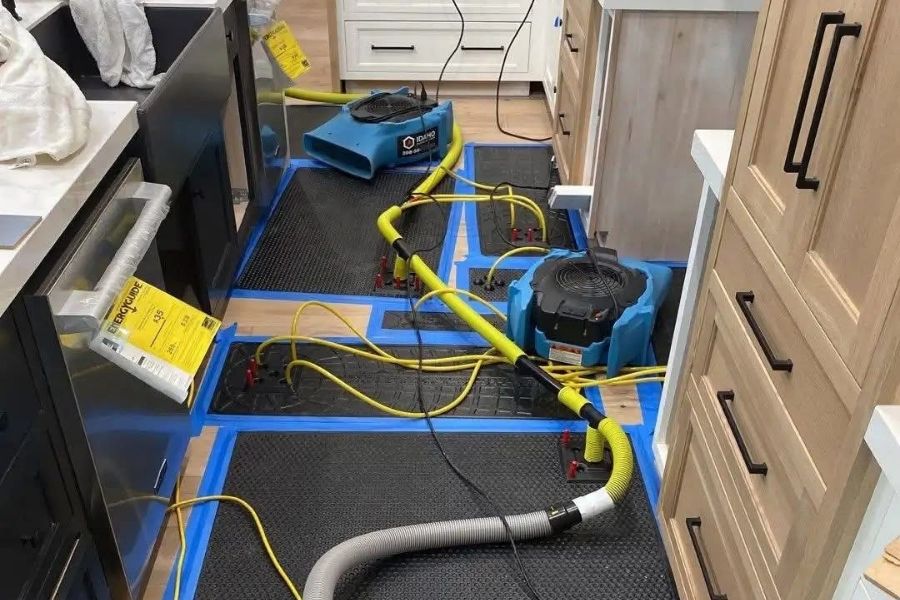
Drying mats and air movers work together to pull trapped moisture from flooring and subfloor materials over several days.
The Drying Process: How It Works
|
1
Air movers push high-speed airflow across wet surfaces |
2
Moisture evaporates from materials into the air |
3
Dehumidifiers capture airborne moisture and remove it |
4
Daily moisture readings confirm materials are drying properly |
Our technicians return each day to take moisture readings at multiple points. Drying isn’t done when things feel dry to the touch. It’s done when meters confirm materials have returned to safe levels, typically 6% to 12% depending on the material. Ending too soon risks mold growth weeks later. Our post on how water damage affects different flooring types covers how each material responds differently to drying.
How Are Affected Areas Cleaned, Sanitized, and Protected From Mold?
Once everything is dry, the cleaning phase begins. This isn’t just wiping things down. Depending on the water category, this step can include antimicrobial treatment on exposed wood, HEPA vacuuming, air scrubbing, and odor removal.
Antimicrobial treatment is especially important in the Pacific Northwest. Our climate’s humidity means materials that sat wet are prime candidates for mold, even after drying. Treating exposed surfaces during this window prevents mold from establishing before new materials go in.

Moisture meters confirm whether walls and structural materials have dried to safe levels before any rebuild work begins.
When mold has already started growing, professional mold remediation becomes part of the project. That involves containment, removal of affected materials, HEPA filtration, and post-remediation verification.
What Does Final Restoration and Rebuild Look Like?
Restoration puts your home back together. Everything before this, extraction, drying, cleaning, is technically “mitigation.” Mitigation stops the damage. Restoration undoes it.
A small kitchen leak might mean replacing a section of drywall and repainting. A major flood could mean new subfloor, drywall, flooring, and paint across multiple rooms. Common restoration work includes:
- Drywall replacement and finishing
- Subfloor repair or replacement
- New flooring installation
- Baseboard and trim replacement
- Painting and texture matching
- Cabinet repair or replacement
Having one team handle both mitigation and restoration makes the whole process smoother. No gap between teams, no miscommunication, and one point of contact throughout. Homeowners across Olympia, Lacey, and Longview appreciate that consistency.
How Does Insurance Fit Into the Water Damage Restoration Process?
Most homeowners’ policies cover water damage from sudden, accidental events like burst pipes, appliance failures, or storm flooding. Damage from long-term neglect or gradual leaks is typically excluded.
At Hydro Heroes – Water Damage Experts, we document damage with photos, moisture readings, and detailed scope reports. We work directly with your adjuster to make sure everything is captured accurately. That documentation drives your claim, so getting it right matters.
One thing worth knowing: mitigation is usually approved quickly because it prevents further loss. The rebuild often requires separate approval. Understanding these as two distinct phases helps set realistic expectations. For more on how mold complications can affect costs, our post on what makes black mold different from other mold types covers the details.
Need Water Damage Restoration in Southwest Washington?
Our IICRC-certified team at Hydro Heroes – Water Damage Experts is available 24/7. Free estimates, direct insurance coordination, and nearly a decade of experience restoring homes across the region.
Learn About Our Centralia Services
Serving Centralia, Chehalis, Olympia, Lacey, Tumwater, Longview, Rochester, and surrounding communities.
Frequently Asked Questions
How long does the water damage restoration process take?
Most residential projects take 5 to 10 days total. Drying runs 3 to 5 days. If structural repairs or mold remediation are needed, the rebuild can add another 1 to 2 weeks.
Can I stay in my home during restoration?
Often, yes. If damage is limited and there are no safety hazards, homeowners can usually stay. Larger jobs involving sewage or whole-home drying may require temporary relocation.
What’s the difference between mitigation and restoration?
Mitigation stops damage from getting worse: extraction, drying, and antimicrobial treatment. Restoration is the rebuild, putting things back together with new materials. Insurance often treats these as separate approvals.
Do I need to file an insurance claim for water damage?
For significant damage, filing is usually worth it. A professional restoration company can document everything and coordinate directly with your adjuster.


